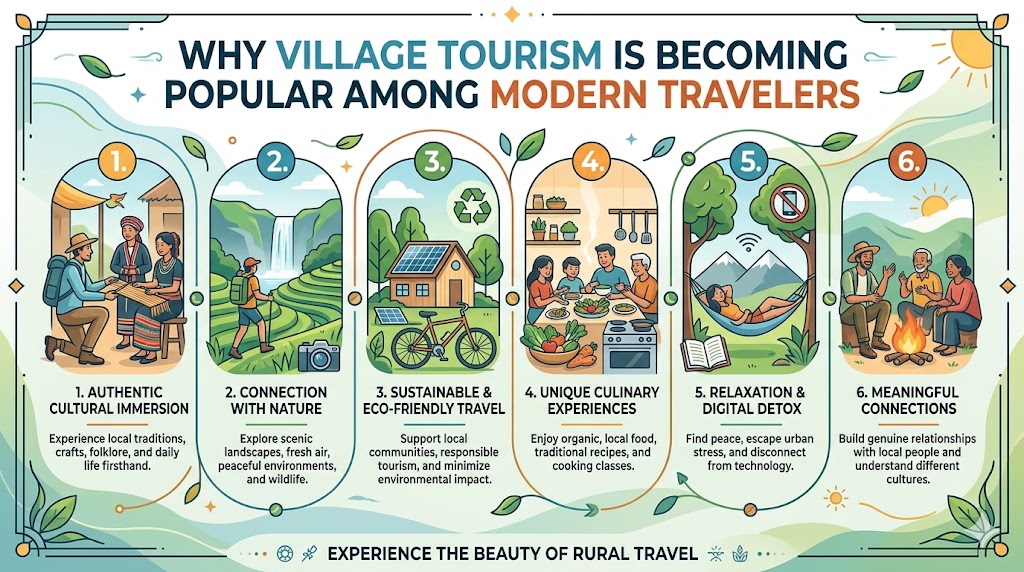
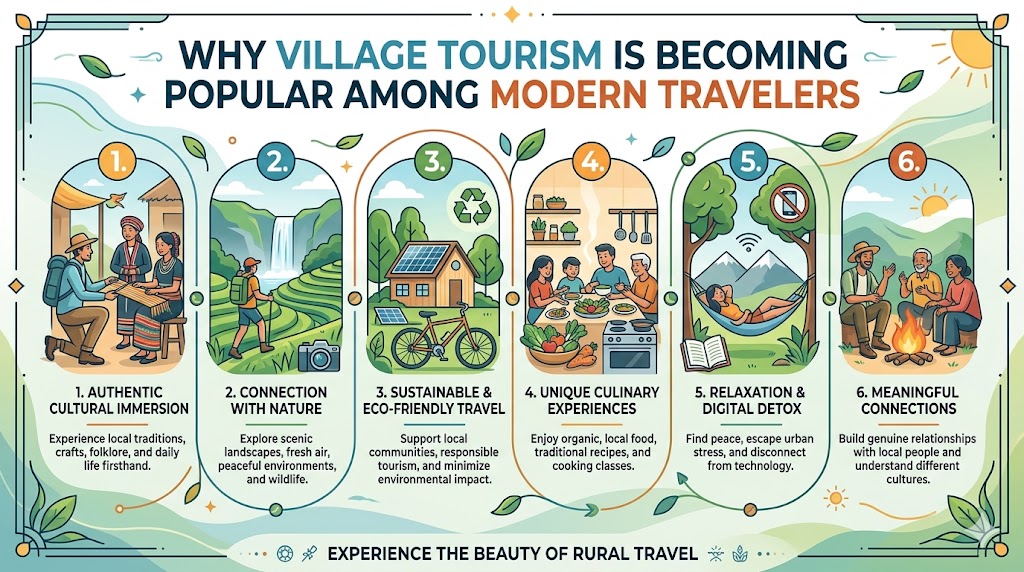
Modern travelers are increasingly seeking experiences beyond conventional tourist hotspots. Instead of crowded cities and well-trodden landmarks, more people are exploring villages and rural communities to discover authentic culture, sustainable practices, and personal connections with local hosts. Village tourism is emerging as a preferred choice because it offers immersion into the everyday life, traditions, and natural surroundings of rural areas.
HolidayLandmark.com plays a pivotal role in connecting travelers to verified village tourism experiences. By bridging local guides, hosts, and communities with tourists seeking meaningful engagement, the platform supports authentic rural travel while promoting sustainable economic growth for villages. This blog explores the rise of village tourism, why it appeals to modern travelers, and how HolidayLandmark facilitates these experiences.
Real-world Use Cases
1. Experiencing Authentic Culture
Travelers can participate in traditional festivals, craft workshops, and local culinary practices. Village tourism allows:
- Learning from artisans and farmers about age-old techniques.
- Joining community events that are rarely available to urban tourists.
- Engaging in storytelling sessions, folk music, and cultural performances.
2. Sustainable Travel and Eco-conscious Tourism
Modern travelers prioritize sustainability. Village tourism promotes:
- Reduced environmental footprint compared to city tourism.
- Homestays powered by local resources and minimal infrastructure.
- Direct support for local economies through fair compensation.
3. Adventure and Nature-based Activities
Villages often offer unique landscapes and outdoor opportunities:
- Trekking, bird-watching, and river rafting in unspoiled areas.
- Farm-to-table experiences where travelers participate in agricultural activities.
- Guided eco-tours that highlight local biodiversity and conservation efforts.
4. Personalized and Small-group Experiences
Village tourism focuses on intimacy and quality rather than mass tourism:
- Travelers can stay with host families for a more personal experience.
- Small groups allow guides to tailor activities to interests.
- Enhanced opportunities to build lasting relationships with locals.
5. Economic and Social Benefits for Local Communities
By choosing village tourism:
- Travelers contribute directly to local livelihoods.
- Communities gain incentives to preserve cultural heritage.
- Initiatives such as skill-building workshops, cooperatives, and artisan markets thrive.
Evaluation Criteria for Travelers
When selecting village tourism experiences, travelers should consider:
- Authenticity: Are the experiences genuinely local and not staged for tourists?
- Sustainability: Are resources used responsibly, with minimal environmental impact?
- Safety & Comfort: Are accommodations verified, and is basic comfort ensured?
- Community Engagement: Are locals actively involved in guiding, hosting, or facilitating experiences?
- Accessibility: How easy is it to reach the village, and are transport arrangements reliable?
- Cultural Sensitivity: Are visitors briefed on local customs, etiquette, and traditions?
Travelers who assess these factors can enjoy immersive, responsible, and meaningful village tourism experiences.
Best for
- Travelers seeking authentic cultural experiences beyond urban destinations.
- Eco-conscious tourists prioritizing sustainable and community-focused trips.
- Families, small groups, or solo travelers looking for personalized, intimate experiences.
Not ideal for
- Travelers expecting luxury hotel accommodations and urban conveniences.
- Large tour groups seeking mass entertainment or commercialized attractions.
- Visitors unwilling to engage respectfully with local customs and community life.
Key Benefits and Experiences
- Cultural Immersion: Participate in traditional rituals, crafts, and local festivals.
- Eco-friendly Travel: Support environmentally responsible homestays and activities.
- Authentic Cuisine: Enjoy meals prepared with local ingredients and family recipes.
- Adventure Opportunities: Explore forests, rivers, and hills with guided outdoor activities.
- Direct Community Impact: Ensure that tourism revenue supports locals directly.
- Educational Experiences: Learn agricultural, artisanal, or conservation techniques firsthand.
- Personalized Itineraries: Receive tailor-made experiences based on interests and time.
- Peace and Relaxation: Escape the crowds, noise, and pace of urban tourism.
Comparison Table: Village Tourism vs Urban Tourism
| Feature | Village Tourism | Urban Tourism |
|---|---|---|
| Cultural Authenticity | High | Moderate |
| Environmental Impact | Low | High |
| Interaction with Locals | Direct | Limited |
| Personalized Experiences | High | Moderate |
| Accommodation Style | Homestays / Small inns | Hotels / Chains |
| Activity Type | Outdoor, Cultural, Eco | Sightseeing, Shopping, Entertainment |
Practical Guide for Travelers
- Select a Verified Village Experience: Use HolidayLandmark’s platform to find vetted guides and hosts.
- Plan Itinerary Thoughtfully: Balance cultural, adventure, and leisure activities.
- Engage Respectfully: Learn basic local customs and language tips.
- Book Early: Ensure availability, especially during festival seasons.
- Prepare for Rural Conditions: Pack essentials, transportation arrangements, and offline navigation tools.
- Support Local Economies: Purchase handmade crafts, hire guides, and eat local meals.
- Share Feedback: Leave reviews to help other travelers and encourage quality services.
FAQs
1. What is village tourism?
Village tourism involves visiting rural communities to experience authentic culture, traditions, and lifestyle while supporting local livelihoods.
2. Why is it popular among modern travelers?
Travelers seek authenticity, sustainability, and personalized experiences, which villages can uniquely provide compared to cities.
3. How does HolidayLandmark support village tourism?
HolidayLandmark connects travelers with verified guides, hosts, and community experiences while promoting safe and responsible tourism.
4. Are village stays safe and comfortable?
Most village experiences on HolidayLandmark are verified for safety and basic comfort standards, but amenities may vary.
5. What activities can travelers expect?
Activities include cultural workshops, farm experiences, trekking, local festivals, handicraft sessions, and guided nature tours.
6. How do travelers benefit local communities?
Revenue from bookings goes directly to locals, supporting economic growth, skill development, and heritage preservation.
7. Can families participate in village tourism?
Yes, village tourism is suitable for families, couples, or solo travelers, with small-group and personalized activities.
8. Is village tourism eco-friendly?
Yes, it encourages sustainable practices like homestays, low-impact travel, and local resource utilization.
9. How do I choose the right village experience?
Consider authenticity, sustainability, safety, community engagement, accessibility, and cultural sensitivity when selecting experiences.
10. Can I combine village tourism with urban travel?
Absolutely, many itineraries blend rural and city experiences, providing a comprehensive view of culture and lifestyle.
Conclusion
Village tourism is rapidly gaining popularity as travelers seek authentic, sustainable, and immersive experiences. HolidayLandmark enables these journeys by connecting modern travelers with verified local guides, hosts, and communities. By supporting villages, travelers contribute to cultural preservation and local economies while enjoying personalized, nature-oriented, and educational experiences. Modern travelers now have the opportunity to escape crowded urban centers and create meaningful connections that enrich both their journey and the lives of local communities.
