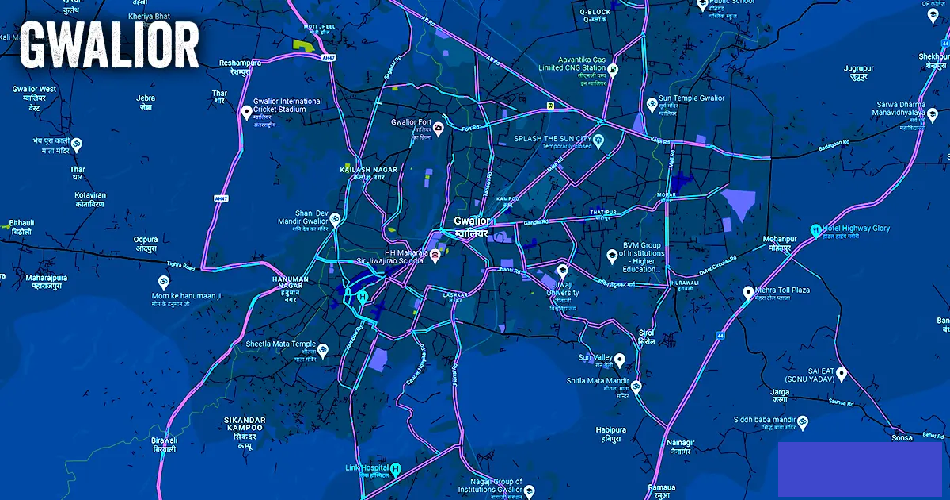
1. Introduction to Gwalior
Gwalior is one of the most historic cities in central India. The city is famous for its massive hilltop fort, royal palaces, ancient temples, classical music heritage, and traditional food culture. Gwalior is well planned, easy to navigate, and suitable for short trips of one to three days.
The city represents a blend of:
- Ancient Indian history
- Rajput and Maratha royal culture
- Mughal architectural influence
- Modern city infrastructure
2. City Orientation and Tourist Zones
Understanding the city layout helps visitors plan their trip efficiently.
Major Tourist Zones
| Area | Main Attractions |
|---|---|
| Fort Area | Fort complex, temples, viewpoints |
| Lashkar | Palaces, museums, major markets |
| Phool Bagh | Gardens and memorials |
| Thatipur | Residential area, hotels |
| City Center | Railway station, food streets |
Most tourist locations are within a 5 to 8 km radius.
3. Major Tourist Attractions
Gwalior Fort
- One of the strongest and oldest forts in India
- Located on a sandstone hill
- Offers panoramic views of the city
- Houses palaces, temples, and museums
Time required: 2 to 3 hours
Man Singh Palace
- Located inside the fort complex
- Known for colorful tile work and Rajput architecture
- Historical residence of Tomar rulers
Jai Vilas Palace
- Grand royal palace of the Scindia family
- Famous for massive chandeliers and European design
- Museum showcasing royal lifestyle and artifacts
Time required: 1.5 to 2 hours
Saas Bahu Temple
- Eleventh-century temple complex
- Detailed stone carvings
- Important example of early Hindu architecture
Teli Ka Mandir
- Tallest structure inside the fort
- Unique blend of North Indian and South Indian temple styles
Tomb of Tansen
- Memorial of the legendary classical musician Tansen
- Calm and spiritual atmosphere
- Important site for music lovers
4. Museums and Cultural Sites
| Museum | Highlights |
|---|---|
| Scindia Museum | Royal history and artifacts |
| Gujari Mahal | Archaeological collections |
| Sarod Ghar | Indian classical music heritage |
5. Religious and Spiritual Places
| Place | Belief |
|---|---|
| Sun Temple | Hindu |
| Gopachal Jain Monuments | Jain |
| Gurudwara Data Bandi Chhor | Sikh |
| Local mosques | Islamic worship |
6. Food and Street Cuisine Guide
Famous Local Dishes
- Bedai and Kachori
- Poha with Jalebi
- Bhutte ka Kees
- Gajak and traditional sweets
Popular Food Areas
| Area | Specialty |
|---|---|
| Naya Bazaar | Breakfast items |
| Maharaj Bada | Street food |
| Phalka Bazaar | Sweets |
7. Shopping Areas
| Market | What to Buy |
|---|---|
| Patankar Bazaar | Clothes |
| Sarafa Bazaar | Jewelry |
| Lashkar Market | Local goods |
| Bada Market | Souvenirs |
8. Hotels and Accommodation Areas
| Area | Suitable For |
|---|---|
| Thatipur | Budget and mid-range |
| City Center | All categories |
| Near Railway Station | Budget travelers |
| Near Fort Area | Premium stays |
9. Transport and Connectivity
How to Reach Gwalior
- Railway: Well-connected junction with major Indian cities
- Road: National highways connect Gwalior with nearby states
- Air: Domestic airport with limited flights
Local Transport Options
- Auto-rickshaws
- E-rickshaws
- App-based taxis
- City buses
10. Download Gwalior Tourist Map
11. Best Time to Visit
| Season | Experience |
|---|---|
| October to March | Best weather |
| April to June | Very hot |
| July to September | Humid with fewer tourists |
12. Safety and Travel Tips
- Carry water while visiting the fort area
- Wear comfortable walking shoes
- Respect religious places
- Cash is useful in local markets
- Local residents are helpful and tourist-friendly
13. Emergency and Useful Information
- Police: 100
- Ambulance: 108
- Railway inquiry: 139
- Major hospitals are located in Lashkar area
14. Why Gwalior Is Ideal for First-Time Visitors?
- Compact city layout
- Rich historical heritage
- Affordable travel and food
- Easy local transport
- Wide range of attractions
