Introduction
Bhopal, the capital of Madhya Pradesh, is often known as the “City of Lakes,” but it is equally famous for its rich cultural heritage and magnificent Islamic architecture. The city has a unique historical identity shaped by the visionary Begums of Bhopal, who played a major role in developing its religious and architectural landmarks. Among the most treasured attractions in the city are its beautiful mosques, which showcase centuries of history, faith, and artistic excellence.
For heritage lovers, architecture enthusiasts, photographers, and cultural travelers, Bhopal’s mosques offer a fascinating journey through time. Their grand domes, elegant minarets, spacious courtyards, and intricate architectural details reflect the city’s deep-rooted Islamic heritage. Exploring these mosques provides an opportunity to appreciate not only their religious significance but also their contribution to India’s architectural and cultural history.
Why Visit Mosques in Bhopal?
Bhopal’s mosques are among the city’s most iconic landmarks and offer a unique heritage experience.
Some reasons to visit include:
- Exploring remarkable Islamic architecture
- Learning about Bhopal’s royal history
- Experiencing cultural and religious heritage
- Enjoying photography opportunities
- Discovering historical monuments
- Appreciating traditional craftsmanship
- Understanding the legacy of the Begums of Bhopal
Taj-ul-Masajid
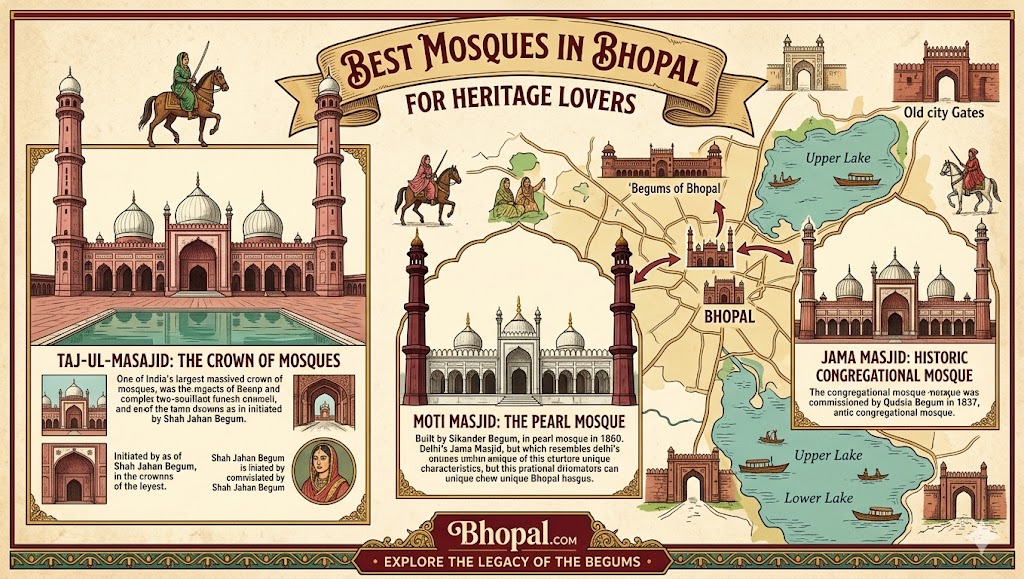
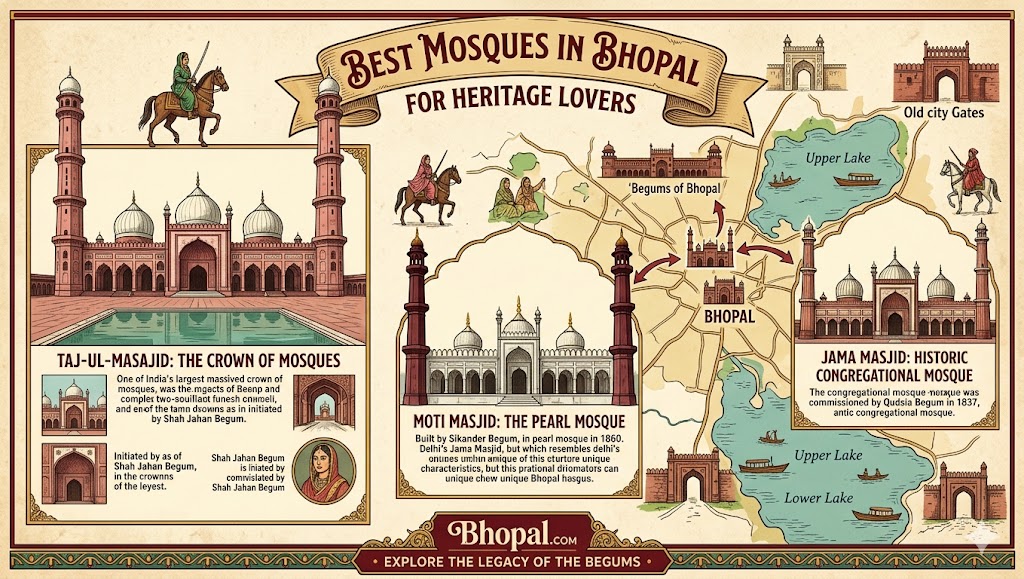
Taj-ul-Masajid is the most famous mosque in Bhopal and one of the largest mosques in India. Its name translates to “Crown Among Mosques,” reflecting its grand stature and architectural beauty.
Highlights
- One of the largest mosques in India
- Massive prayer hall
- Beautiful pink facade
- Impressive domes and minarets
- Large central courtyard
Historical Significance
Construction began during the reign of Shah Jahan Begum and continued over several decades. The mosque remains one of Bhopal’s most important religious and architectural landmarks.
Visitor Experience
Visitors are often amazed by the scale of the structure and the peaceful atmosphere within the mosque complex.
Moti Masjid
Moti Masjid, meaning “Pearl Mosque,” is a beautiful mosque built by Sikander Begum in the nineteenth century. Its elegant design and bright white appearance make it one of Bhopal’s most attractive heritage sites.
Highlights
- Built by Sikander Begum
- Elegant white facade
- Historical significance
- Beautiful minarets
- Traditional Islamic architecture
Historical Significance
The mosque reflects the architectural vision of the Begums who greatly influenced Bhopal’s development.
Visitor Experience
Its compact yet elegant design makes it a favorite destination for architecture enthusiasts and photographers.
Jama Masjid Bhopal
Jama Masjid is one of the oldest and most respected mosques in Bhopal. It remains an active place of worship and an important cultural landmark.
Highlights
- Historic religious site
- Gold-tipped minarets
- Large prayer area
- Beautiful architectural details
Historical Significance
The mosque was constructed during the early development of modern Bhopal and continues to serve the local community.
Visitor Experience
Visitors can appreciate its peaceful atmosphere while observing traditional Islamic architectural features.
Gohar Mahal Mosque Area
Although Gohar Mahal itself is a palace, the surrounding area contains several historical religious structures and reflects the Islamic heritage of old Bhopal.
Highlights
- Connection to royal history
- Historic surroundings
- Architectural heritage
- Cultural significance
Visitor Experience
Exploring this area allows visitors to understand how religious and royal architecture developed together in Bhopal.
Shaukat Mahal Religious Heritage Area
Shaukat Mahal is known for its distinctive architectural style influenced by both Islamic and European designs. Nearby religious sites contribute to the area’s heritage value.
Highlights
- Unique architectural influences
- Historical importance
- Cultural heritage attractions
- Excellent photography opportunities
Visitor Experience
Visitors can admire the blend of artistic styles while exploring nearby heritage landmarks.
Sadar Manzil Mosque Vicinity
The Sadar Manzil area is an important part of Bhopal’s historical center and features several heritage structures associated with the city’s Islamic legacy.
Highlights
- Historical significance
- Heritage surroundings
- Cultural landmarks
- Traditional architecture
Visitor Experience
Walking through this area provides insight into Bhopal’s historical urban development and religious heritage.
Historic Neighborhood Mosques
Throughout Old Bhopal, visitors can discover numerous smaller mosques that showcase traditional Islamic architecture and local community traditions.
Highlights
- Traditional design elements
- Local cultural significance
- Historical charm
- Architectural diversity
Visitor Experience
These lesser-known mosques offer an authentic glimpse into everyday religious life and heritage preservation.
Architectural Highlights of Bhopal Mosques
The mosques of Bhopal feature remarkable architectural characteristics that attract historians and architecture enthusiasts alike.
Notable Features
- Grand domes
- Elegant minarets
- Spacious courtyards
- Ornamental arches
- Decorative carvings
- Symmetrical layouts
- Indo-Islamic architectural influences
These elements combine to create visually stunning monuments that reflect centuries of craftsmanship and artistic achievement.
Heritage Photography Tips
Bhopal’s mosques provide exceptional opportunities for architectural photography.
Photography Suggestions
- Visit during early morning light
- Capture reflections and symmetry
- Focus on domes and minarets
- Photograph intricate carvings
- Respect local customs
- Seek permission where required
Best Time to Visit Bhopal Mosques
Visitors can enjoy these heritage sites throughout the year, but certain seasons offer more comfortable experiences.
Recommended Seasons
- October to March for pleasant weather
- Early mornings for fewer crowds
- Late afternoons for better lighting
- Festival periods for cultural experiences
Cultural Etiquette for Visitors
Respecting local traditions enhances the visitor experience and helps preserve the sanctity of these religious sites.
Important Guidelines
- Dress modestly
- Remove footwear when required
- Maintain respectful behavior
- Avoid disturbing worshippers
- Follow photography rules
- Observe silence during prayers
Suggested Heritage Walking Tour in Bhopal
Morning
- Begin at Taj-ul-Masajid
- Visit Jama Masjid
- Explore surrounding heritage streets
Afternoon
- Visit Moti Masjid
- Explore Gohar Mahal area
- Enjoy local cuisine
Evening
- Walk around Sadar Manzil
- Explore Shaukat Mahal surroundings
- Capture sunset photography
Nearby Attractions
Visitors exploring Bhopal’s mosques can also enjoy several nearby attractions.
Popular Places
- Upper Lake
- Lower Lake
- Gohar Mahal
- Shaukat Mahal
- Bharat Bhavan
- Local heritage markets
- Cultural centers and museums
Travel Tips for Heritage Lovers
Make the most of your visit with a few practical preparations.
Useful Tips
- Wear comfortable walking shoes
- Carry drinking water
- Hire local guides for historical insights
- Check visiting hours in advance
- Respect religious customs
- Carry a camera for architecture photography
Frequently Asked Questions
1. Which is the most famous mosque in Bhopal?
Taj-ul-Masajid is the most famous mosque in Bhopal and is widely recognized as one of the largest mosques in India.
2. What is special about Taj-ul-Masajid?
Its immense size, beautiful pink facade, massive courtyard, and historical significance make it one of India’s most impressive mosques.
3. Are visitors allowed inside Bhopal’s mosques?
Many mosques welcome visitors, provided they follow local customs and maintain respectful behavior.
4. What should tourists wear when visiting mosques?
Modest clothing that covers shoulders and knees is generally recommended for all visitors.
5. Is photography permitted inside mosques?
Photography policies vary by location. Visitors should always seek permission before taking photographs.
6. Which mosque is best for architecture lovers?
Taj-ul-Masajid and Moti Masjid are particularly popular among architecture enthusiasts due to their distinctive designs.
7. What is the best time to visit Bhopal’s heritage sites?
The cooler months from October to March provide the most comfortable conditions for sightseeing.
8. Can guided heritage walks be arranged?
Yes, several local tourism operators and guides offer heritage walks covering Bhopal’s historic landmarks.
9. Are these mosques still active places of worship?
Yes, many of Bhopal’s historic mosques continue to function as active religious centers.
10. How much time is needed to explore the major mosques?
A full-day heritage tour is usually sufficient to visit the city’s major mosques and nearby cultural attractions.
Conclusion
Bhopal’s mosques stand as remarkable symbols of the city’s rich history, cultural diversity, and architectural excellence. From the grandeur of Taj-ul-Masajid and the elegance of Moti Masjid to the heritage-rich neighborhoods surrounding Jama Masjid and Gohar Mahal, each site tells a unique story of faith, craftsmanship, and royal patronage. For heritage lovers, these magnificent landmarks offer an opportunity to explore centuries of history while appreciating some of India’s finest examples of Islamic architecture. A visit to Bhopal’s historic mosques provides not only a deeper understanding of the city’s cultural heritage but also an unforgettable journey through one of central India’s most fascinating historical destinations.
