Introduction
Bhopal’s history lives in mosque courtyards, royal buildings, old streets, and museum halls. Each place offers a different way to understand the city.
Some sites tell the story of the Begums, Bhopal’s women rulers. Others reveal art, faith, trade, and everyday life.
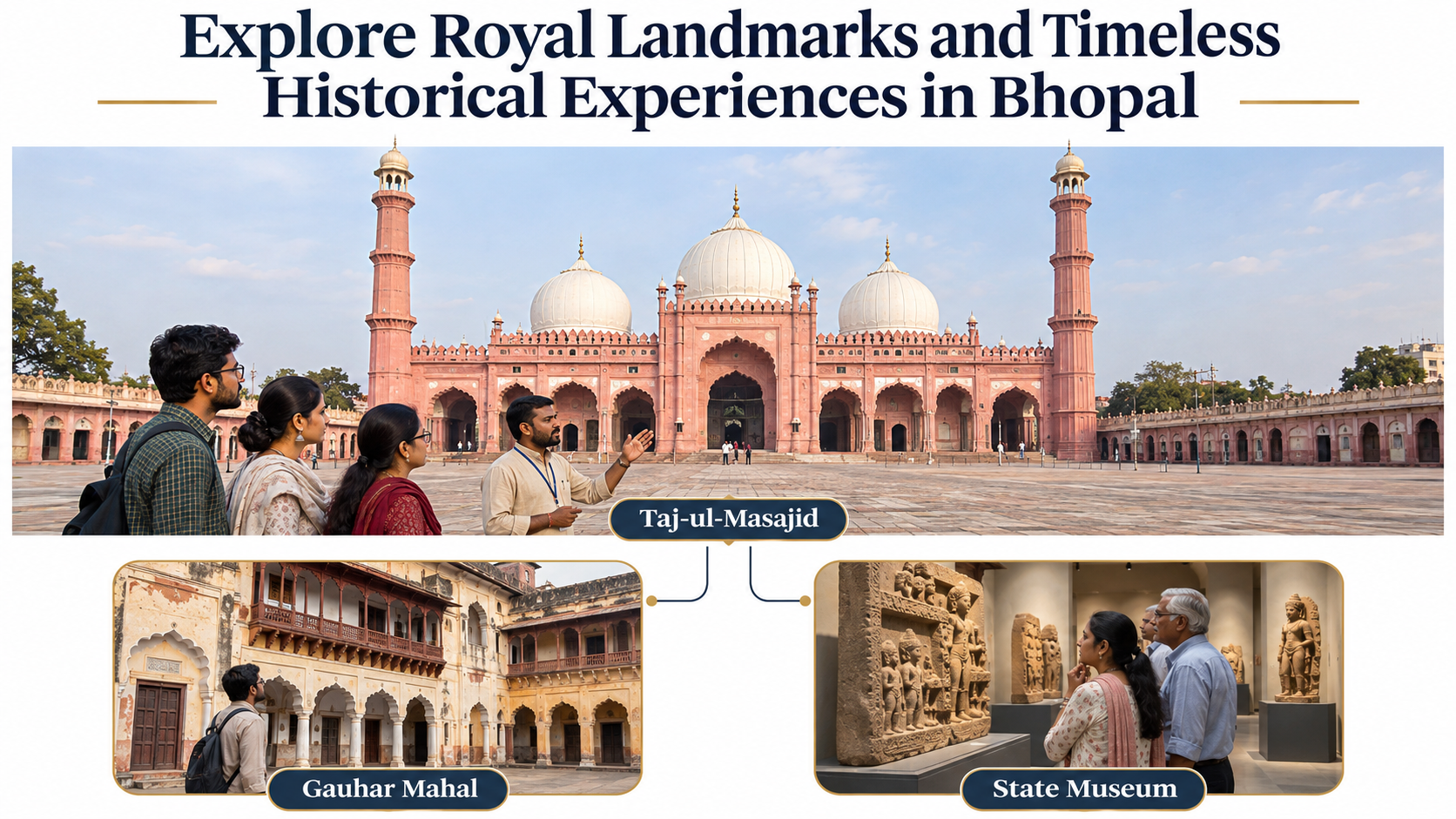
The best historical experiences in Bhopal include old-city walks, Gauhar Mahal, Taj-ul-Masajid, and the State Museum. Beyond the city, Sanchi and Bhimbetka offer rich day-trip options.
However, a useful visit needs a clear plan. Choose a few places and leave time to explore them properly.
Bhopal Orbit can help you discover local events alongside your heritage plans. Then, confirm entry rules and travel details separately.
1. Explore Old Bhopal and Taj-ul-Masajid
Begin with old Bhopal to see history within a living neighbourhood. Notice shopfronts, narrow lanes, old buildings, and places of worship.
Taj-ul-Masajid offers a striking stop for people interested in mosque design. Look at the domes, tall towers, and broad courtyard from permitted areas.
First, ask about visitor access and suitable visiting times. Because worship takes priority, sightseeing plans may need to change.
Next, dress respectfully and follow instructions about shoes and photography. Keep your voice low and avoid photographing worshippers without permission.
Then, explore a short stretch of nearby streets. A guide can explain local stories and help you understand the links between buildings.
2. Follow the Begums’ Stories at Gauhar Mahal
Bhopal’s women rulers form an important part of its royal history. Gauhar Mahal offers a useful starting point for exploring that story.
First, read the information near the entrance. Then, look closely at the courts, arches, doorways, and mix of building styles.
Ask how rulers used different spaces. Public meetings, private life, and official work needed different settings.
Next, check which areas currently allow visitors. Old buildings may limit access to rooms or upper floors.
Sadar Manzil and Shaukat Mahal also appear in Bhopal’s heritage story. However, confirm their current use and visitor access before planning interior visits.
Finally, avoid judging every building only by its outer appearance.
3. Connect Objects and Stories at Bhopal’s Museums
The State Museum helps explain the wider history of Madhya Pradesh. Its collections include coins, sculptures, paintings, weapons, and other objects.
First, choose two or three subjects that interest you. Trying to study every display can make the visit tiring.
Next, read the label beside one object carefully. Ask where it came from and what it reveals about people’s lives.
The Madhya Pradesh Tribal Museum offers a different focus. Its displays explore community life, homes, craft, stories, and beliefs.
Visit it for living cultural heritage, rather than treating tribal communities as people from a vanished past.
Also, check each museum’s hours and rules separately.
4. Plan a Separate Visit to Sanchi
Sanchi lies outside Bhopal and needs its own travel plan. Its Buddhist monuments offer a deeper look at faith, art, and building craft.
Start with the Great Stupa. A stupa is a sacred Buddhist monument that often holds relics.
Next, study one carved gateway rather than rushing around the whole site. Ask a guide to explain its figures and symbols.
Then, explore the surrounding monuments at a comfortable pace. Follow marked paths and respect people who come to worship.
Arrange your return journey before leaving Bhopal. Also, carry water, suitable shoes, and sun cover.
Keep enough time for travel and rest. Avoid squeezing Sanchi into an already crowded city day.
5. Study Rock Art at Bhimbetka
Bhimbetka also lies outside Bhopal. Its rock shelters offer a very different experience from palaces and museums.
Here, painted rock surfaces reveal traces of human life across long periods. Look for animals, human figures, and scenes that guides help explain.
First, follow the marked visitor route. Next, let your eyes adjust before looking closely at faded paintings.
Never touch, wet, trace, or mark the rock art. Even a small action can harm an old surface.
Also, ask which ideas come from evidence and which remain uncertain. Not every painting shares the same age or meaning.
Choose Bhimbetka for a separate outing with time for careful viewing.
Real Experience & Personal Stories
A memorable history visit often begins with one small detail. You might notice a carved doorway, a painted animal, or a worn coin.
During your trip, write down what caught your attention. Then, add the explanation from a label or guide.
Also, note any question that remains unanswered. This helps you continue learning after the visit.
When speaking with local people, ask politely about their connection with the place. Seek permission before recording or sharing their words.
This article does not claim a personal visit. Instead, these steps help you build an honest travel story from your own observations.
Case Studies & Success Stories
These sample plans show how different needs can shape a good visit. They describe possible trips, rather than real customer results.
A family with one city day chooses a short old-city walk and one museum. They leave room for lunch and breaks.
A visitor interested in royal history focuses on Gauhar Mahal and the Begums’ story. They confirm access before adding other buildings.
A traveller drawn to ancient art gives Bhimbetka a separate day-trip slot. They arrange transport and allow a slow walking pace.
Each plan has one clear purpose. Success means understanding that story comfortably, rather than visiting the most places.
Original Insights & Opinions
Bhopal becomes more interesting when you compare different kinds of evidence. A palace shows space, while a museum object reveals a smaller part of life.
So, pair a building visit with a focused museum stop. Ask how each helps explain the other.
Also, give women rulers more attention than a passing mention. Their role helps distinguish Bhopal’s history from many standard royal travel stories.
My recommendation is to separate city sightseeing from longer day trips. Sanchi and Bhimbetka deserve their own time.
Finally, choose depth over a crowded route. One clear story can stay with you longer than ten hurried stops.
Industry Statistics & Research Data
Useful facts should help you plan or understand a place. They should not simply make an attraction sound grand.
Madhya Pradesh Tourism describes the State Museum as having 17 galleries. That range supports a focused visit rather than rushing through everything.
UNESCO recognises both Sanchi’s Buddhist monuments and Bhimbetka’s rock shelters as World Heritage Sites. Their importance goes beyond their value as day-trip stops.
However, heritage status does not promise easy access or fixed visitor services.
Also, do not assign one age to every Bhimbetka painting. The site holds art from different periods, so careful explanations matter.
Step-by-Step Guides & Tutorials
Step 1: Choose your theme.
Pick royal history, places of worship, museum objects, Buddhist art, or rock paintings.
Step 2: Separate city and day-trip plans.
Group Bhopal stops together. Give Sanchi or Bhimbetka a separate outing.
Step 3: Confirm access.
Check opening hours, closures, prayer-related access, and any repair work.
Step 4: Arrange transport.
Confirm pickup, return travel, waiting charges, parking, and extra stops.
Step 5: Choose a guide if useful.
Agree on the route, language, duration, and full fee.
Step 6: Set your budget.
Count transport, entry, guides, meals, and any overnight stay.
Step 7: Pack lightly.
Carry water, sun cover, suitable shoes, and booking details.
Step 8: Recheck before leaving.
Review weather, meeting points, and any changes from the host.
Expert Interviews & Quotes
A useful guide should explain where a story comes from. Ask whether the source is a written record, an object, or local tradition.
At Gauhar Mahal, ask how different rooms served royal life. At Sanchi, ask how carved symbols tell a story.
For Bhimbetka, UNESCO highlights the long connection between people and their landscape. Use that idea to look beyond the paintings alone.
Ask how rock, shelter, water, and nearby land supported life.
No private expert interview forms part of this article. However, these questions can help you get thoughtful answers during a real guided visit.
Detailed Comparisons: City Heritage vs Nearby Ancient Sites
Choose your experience by interest, available time, and walking comfort.
| Experience | Main appeal | Main planning need |
|---|---|---|
| Old Bhopal | Streets, mosques, and daily life | Visitor access and a manageable route |
| Royal buildings | Begums’ stories and building design | Current use and open areas |
| State Museum | Objects from the wider region | A focused choice of galleries |
| Sanchi | Buddhist monuments and carvings | Separate transport and outdoor time |
| Bhimbetka | Rock shelters and paintings | Suitable shoes and careful viewing |
For a first city visit, start with nearby Bhopal stops. Then, add an outside trip if you have enough time.
Unique Frameworks & Methodologies
Use a simple method called Look, Learn, Link. It helps adults and children enjoy history without memorising long lists.
Look: Choose one feature. It might be a doorway, coin, gateway carving, or painted animal.
Learn: Read its label or ask a guide about its purpose. Also, ask what remains uncertain.
Link: Connect it with daily life. A coin can open a story about trade, while a courtyard can explain shared space.
Then, explain the idea in your own words. Children can draw the feature instead.
Repeat this a few times during the visit. You do not need to study every object.
Real Examples & Use Cases
Use these sample outlines as starting points. Adjust them to your location, access needs, and current opening hours.
| Time available | Suggested focus | Keep in mind |
|---|---|---|
| Half a day | Gauhar Mahal and a short old-city walk | Confirm access first |
| One city day | Old-city heritage and one museum | Allow travel and meal breaks |
| One extra day | Sanchi or Bhimbetka | Choose one main destination |
| A longer stay | City heritage plus separate outside trips | Leave room for rest |
Bhopal Orbit can help you explore events that fit around the route. However, check the host and included services before booking.
Frequently Asked Questions About Bhopal Orbit
1. What is Bhopal Orbit?
Bhopal Orbit helps people discover local events, workshops, performances, and other activities.
2. Can it help me plan a heritage outing?
Use it to explore ideas and suitable listings. Confirm site access separately.
3. Does Bhopal Orbit run every listed activity?
Check the named host. Do not assume the platform runs each event.
4. Does a booking include monument entry?
Read the offer carefully. Entry, transport, and guide fees may cost extra.
5. Which historical experience suits a first Bhopal visit?
Start with old-city heritage and Gauhar Mahal. Add a museum if time allows.
6. Are Sanchi and Bhimbetka inside Bhopal?
No. Both lie outside the city and need separate travel plans.
7. Can families enjoy these visits?
Yes. Choose short routes, regular breaks, and simple stories for children.
8. Should I hire a guide?
A guide can explain details. Agree on the route, language, and fee first.
9. Can older travellers visit comfortably?
Ask about steps, walking distance, seating, and toilets before choosing a route.
10. Where should I confirm current entry rules?
Contact the site office, museum, tourism service, or confirmed tour host.
Final Thought
Let your interests shape the trip. Bhopal offers royal stories, living streets, museum collections, and access to remarkable nearby sites.
Start with a small route and enough time to explore. Then, ask questions that connect buildings and objects with real people.
Use Bhopal Orbit to discover events that may complement your visit. Confirm the practical details before travelling.
A thoughtful history trip leaves you with more than photos. It gives you stories that you understand and can share.
