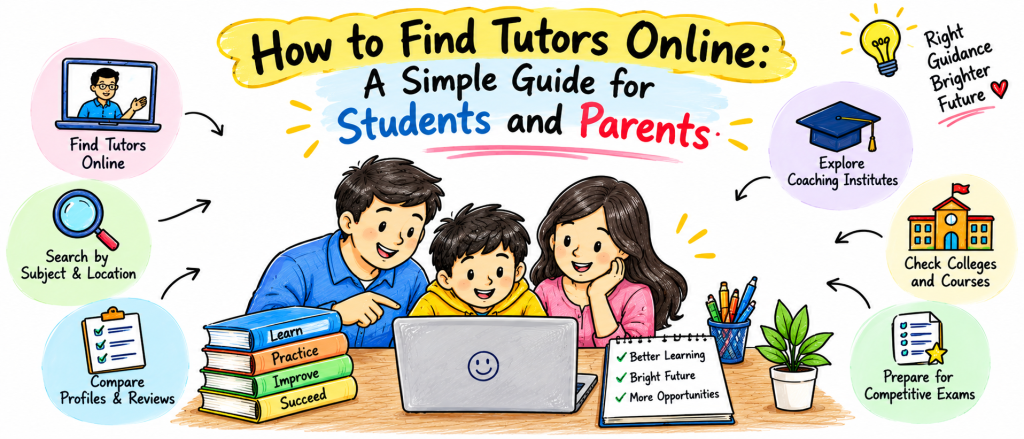
Introduction
A helpful teacher can change the way a student learns. Good guidance can turn a hard topic into an easy lesson.
Yet, finding the right teacher takes some thought. Students have different goals, subjects, study habits, and skill levels.
Some learners need help with school subjects. Others want exam practice or support with a special skill.
Parents also want a safe and useful learning choice. They need clear details before they select a tutor or institute.
Online learning now gives students many options. Local classes also remain useful for learners who enjoy face-to-face teaching.
So, the best place to start is with your own learning need. Once you know that need, you can search with more focus.
GurukulGalaxy brings tutors, institutions, courses, colleges, and exam information together. This can make education research easier for students and parents.
Start With Three Simple Questions
Before you search for a tutor, answer three questions.
What do I want to learn?
Choose the subject first. You may need maths, science, English, coding, or another subject.
Why do I need help?
Maybe you want better marks. You may need help with weak topics. You may also prepare for an important exam.
How do I like to learn?
Some students enjoy live classes. Others like flexible online lessons. Some learners prefer small groups.
These answers can guide your search. They can also help you explain your needs to a teacher.
For example, a beginner needs a different lesson plan from an advanced student. So, always match the tutor with your current level.
A clear goal can save time. It can also help you avoid choices that do not fit.
Find Tutors Online With a Clear Plan
Students can find tutors online from many locations. This gives learners more choices than a local search alone.
Start with your subject. Then look at tutors who teach your student level.
Next, check the details that matter to you. Do not focus only on a profile name or short description.
Look for:
- Subject knowledge
- Teaching experience
- Student level
- Class timing
- Teaching style
- Practice support
- Doubt support
- Learning goals
You should also ask how the tutor explains hard topics. A good tutor should make ideas easier to understand.
Ask how the tutor checks progress. Regular feedback can show students where they need more practice.
Parents can also ask about homework and lesson plans. These details can help families understand the learning process.
Compare a few tutors before you choose. A careful search can help you find a better match.
Look Beyond Your City With Online Tutors India
Online learning can connect students with teachers from different parts of the country. Online tutors India can give learners more choices.
This option can help students who live in smaller towns. It can also help learners who need support in a special subject.
Online classes may reduce travel time. Students can also find teachers who match their preferred schedule.
However, students still need to check tutor details. Online access alone does not guarantee a good learning experience.
Ask about the class format. Find out how students ask questions and receive feedback.
Parents can also ask how the teacher tracks progress. A simple progress system can help students stay focused.
Students should explain their weak topics honestly. This helps the tutor understand where to begin.
The best online lesson should match the student’s level, goal, and study style.
When You Want to Find Tutors Near Me
Not every learner wants online classes. Some students learn better when they sit with a teacher.
If you want to find tutors near me, begin with your area and subject. Then create a short list of local choices.
A nearby tutor can make regular lessons easier. Students may also spend less time travelling.
But do not choose a tutor only because the tutor lives nearby. Teaching skills matter too.
Check the tutor’s subject knowledge and experience. Ask about lesson plans and class timing.
You can also ask how the tutor helps students who struggle. Good support can make a big difference during difficult topics.
Parents should discuss the student’s daily schedule. The class should fit school, college, work, and other activities.
Location matters, but learning needs matter more. Try to find a balance between both.
What to Check at Coaching Institutes Near Me
Some learners prefer group classes instead of one-to-one lessons. They may want a fixed routine and regular tests.
That need often leads students to search for coaching institutes near me.
A coaching centre may offer classes, study material, practice tests, and doubt sessions. However, every centre follows its own approach.
Start by checking the course. Make sure it matches your subject and level.
Then check the teachers. Ask about their teaching method and class experience.
You should also look at class size. Large groups may offer less time for personal questions.
Before joining, ask about:
- Course length
- Class schedule
- Study material
- Practice tests
- Doubt sessions
- Progress checks
- Fees
- Missed-class rules
Parents should understand all major details before making a payment.
A good coaching choice should support the student’s goal. It should also fit the student’s time and budget.
How to Compare the Best Coaching Institutes in India
Many students search for the best coaching institutes in India. But students have different needs, so one centre may not fit everyone.
Instead of using popularity as your main guide, compare useful details.
Start with the course plan. Does it cover the topics you need?
Next, look at teacher support. Can students ask questions during or after class?
Check the practice system too. Regular practice can help students find weak areas.
You should also understand the test plan. Tests can help students track their progress.
Parents can ask about student support. Find out what happens when a learner falls behind.
Fees also matter. Compare what each course includes before you decide.
Create a small comparison list. Give each institute the same questions.
This method can help you focus on real learning needs instead of simple popularity.
Plan Your College Search India Journey
College planning needs careful research. Students should not choose a college without understanding the course.
Start your college search India process with your interests. Think about the subjects you enjoy and the field you want to explore.
You may prefer technology, science, business, design, arts, or another area.
After that, find courses that match your interests. Check the subjects, entry rules, course length, and study format.
Location can also affect your choice. Think about travel, living needs, and your daily routine.
Make a shortlist of possible colleges. Then remove options that do not match your needs.
Students can discuss the shortlist with parents. Teachers and mentors can also help explain difficult details.
Good college research takes time. But careful research can make the final choice much clearer.
Compare Colleges and Courses Step by Step
Two colleges may offer similar courses. Yet, their course content, fees, location, and learning support may differ.
That is why students should compare colleges and courses before they choose.
Start with the course subjects. Ask what skills the course will help you build.
Then check entry requirements. Make sure you understand what you need before applying.
Compare each option using the same points:
- Course content
- Course length
- Entry rules
- Study format
- Location
- Fees
- Learning support
- Campus facilities
- Student services
Your main goal should guide the comparison. Do not let a college name make the decision for you.
Read the course details carefully. Ask questions when information seems unclear.
A simple comparison can help students see the real differences between choices.
Understand Competitive Exams in India Before Studying
Students can choose from many competitive exams in India. Each exam can have its own subjects, rules, and format.
Before you start preparing, understand the exam. First, check the eligibility requirements.
Next, learn about the subjects. Then divide the syllabus into smaller topics.
This approach can make a large syllabus easier. You can study one small area at a time.
Practice questions can also help. They can show you which topics need more attention.
Keep a mistake notebook or digital list. Write down questions that you answer incorrectly.
Review those mistakes during revision. This simple habit can improve your understanding.
Also, give yourself regular breaks. Good study habits need both focus and rest.
The first step toward good preparation is understanding what the exam expects.
Create a Realistic Competitive Exam Preparation Routine
Competitive exam preparation needs regular practice. Students should create a routine that they can follow.
Start with a daily study target. Keep the target realistic.
Then divide your subjects across the week. Give extra time to difficult areas.
Include practice sessions in your routine. Add revision after you complete important topics.
You can use this simple pattern:
Learn → Practice → Check → Fix → Revise
First, learn the topic. Next, solve questions.
Then check your mistakes. After that, review the areas that caused problems.
Finally, revise the topic again.
Mock tests can also help students manage time. They can show which areas need more work.
Do not build a plan that fills every minute. Leave room for breaks and unexpected tasks.
A routine should help you study better. It should not make you feel overwhelmed.
Explore Competitive Exams After 12th
The period after school can bring many questions. Students may explore competitive exams after 12th while planning their next course.
Start with your interests. Think about the subjects you enjoy.
Then explore courses linked to those interests. Find out which exams connect with those courses.
Check the important details for each exam. Look at eligibility, subjects, format, and preparation needs.
Create a short list of suitable options. Then compare each option with your personal goals.
Parents can help students discuss the choices. Teachers and tutors can also answer questions.
Do not select an exam only because friends choose it. Your interests and goals may differ.
Take enough time to understand each option. A clear plan can make the next step easier.
Use AEO and AI Search Ideas in Simple Words
Students now use search engines and AI tools for education questions. Clear content helps them find useful answers.
AEO means Answer Engine Optimization. It helps content answer direct questions clearly.
GEO means Generative Engine Optimization. It helps useful information work well with systems that create answers.
LLMO means Large Language Model Optimization. It helps language models understand useful content.
AISEO means AI Search Optimization. It focuses on content that works well with modern AI search.
E-E-A-T focuses on experience, expertise, trust, and useful information.
These ideas matter when people create education content. Clear answers can help students understand topics faster.
Useful education content should include practical steps. It should also use real examples and clear comparisons.
Students should still check important information before making major education decisions.
A Practical Framework for Better Education Choices
Students can use one simple framework for many learning decisions.
Step 1: Define
Write down the subject and goal.
Step 2: Discover
Search for tutors, institutes, courses, colleges, or exams.
Step 3: Check
Review experience, course details, fees, timing, and support.
Step 4: Compare
Use the same points for every option.
Step 5: Ask
Contact the tutor or institution when you need more information.
Step 6: Decide
Choose the option that matches your needs.
Step 7: Review
Check your progress after you start learning.
This framework keeps education research simple. It also gives parents and students a clear way to discuss choices.
Most importantly, start with your own needs. Do not copy another student’s path without understanding your situation.
Real Learning Needs Can Look Very Different
Consider three students.
The first student struggles with basic maths. A patient one-to-one tutor may help that learner understand the basics.
The second student prepares for an entrance exam. That student may need structured lessons, practice tests, and revision.
The third student wants to choose a college. That learner needs course details, entry information, and college comparisons.
These examples show why students need different forms of support.
Parents can start by asking simple questions. What does the student find hard? What does the student want to achieve?
Tutors and mentors can then help students understand their weak areas.
The best education choice should solve a real need. It should also fit the student’s schedule and learning style.
Explore Education Choices With GurukulGalaxy
GurukulGalaxy combines several education discovery needs in one place. Students and parents can explore tutors, institutions, courses, colleges, and exam information.
Learners can use the platform to search for tutors. They can also explore institutions and course options.
Parents can use the platform when they compare education choices. Students can use it when they plan their next study step.
The platform also covers exam information and learning resources. These resources can help students understand different study paths.
The idea stays simple. Learners need useful information before they make important education choices.
Start exploring here: GurukulGalaxy
Use the platform as one part of your research. Compare your options, ask questions, and choose according to your own learning needs.
Frequently Asked Questions About Tutors and Education
1. What should I look for in an online tutor?
Check subject knowledge, teaching experience, student level, class timing, teaching style, and learning support.
2. Can online tutors help students from smaller cities?
Yes. Online classes can connect learners with teachers from many locations.
3. How do I find a local tutor?
Search by subject and location. Then compare nearby tutors based on skills, experience, timing, and teaching style.
4. What makes a coaching institute useful?
A useful institute should offer suitable teachers, a clear course plan, practice work, student support, and regular progress checks.
5. How can I compare coaching institutes?
Create a shortlist and compare teachers, courses, class size, study material, tests, fees, and support.
6. What matters during college research?
Look at the course, subjects, entry rules, location, fees, study format, and learning support.
7. Why should students compare courses?
Course comparison helps learners understand what each option offers. It can also help them match courses with their goals.
8. How can I make an exam study plan?
Start with the syllabus. Then divide topics into small goals and add practice, revision, and mock tests.
9. What should students check after 12th?
Students should check their interests, suitable courses, exam rules, eligibility, subjects, and preparation needs.
10. What does GurukulGalaxy help learners discover?
GurukulGalaxy helps learners explore tutors, education institutions, courses, colleges, and exam information.
Final Thoughts
Finding the right tutor does not need to feel difficult. A clear goal can make the search much easier.
Students should first understand what they need. Then they can explore suitable teachers, coaching centres, colleges, courses, or exams.
Parents can support the process by asking useful questions. Teachers and mentors can also help learners understand their choices.
Take time to compare options. Look beyond names and popularity.
Focus on teaching quality, course details, learning support, schedule, and personal goals.
Every learner has a different path. The best education choice should fit that individual path.
With careful research and the right guidance, students can take their next learning step with greater clarity.
